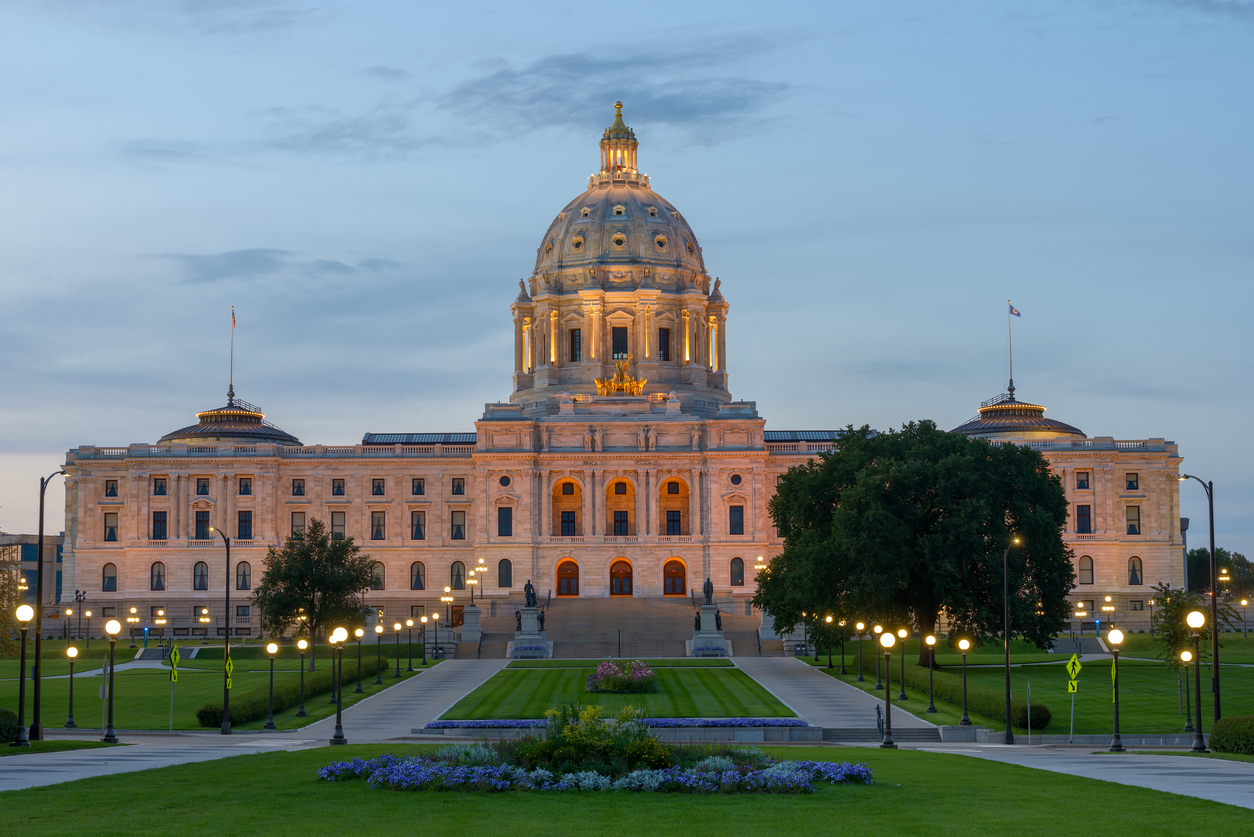
The Minnesota Legislature completed its session on May 18, 2026. Minnesota Academy of Family Physicians (MAFP) lobbyist Megan Verdeja provides an overview of what happened, MAFP legislative priorities and continued advocacy work.
MAFP Legislative Priorities
What Passed
HCMC Support
Hennepin County Medical Center (HCMC) received nearly $660 million in stabilization funding in a budget agreement between House and Senate leaders and Governor Tim Walz. The funding package has two main components:
- $205 million in immediate stabilization funding from the state’s general fund, effective for the fiscal year beginning July 1, 2026.
- A reserve account of up to $500 million that HCMC—and possibly other hospitals facing financial burdens due to uncompensated care—can draw from through 2031.
HCMC is the state’s largest safety net hospital. It faced imminent financial collapse, making legislative action critical. The MAFP has worked with Hennepin residents, faculty, alumni and family medicine leaders statewide. Together, they have highlighted Hennepin’s important role in primary care access and training.
Direct Primary Care (DPC) Safe Harbor
Additionally, the Omnibus Health and Human Services Budget and Policy Bill contained a provision to enact a safe harbor for those practicing DPC, stating that DPC does not count as insurance. Family medicine leaders were active in testifying and educating legislators on DPC over the past several months.
Due to the late hour at which the language was incorporated, an amendment that would have removed unnecessary parameters for DPC practice did not make the final bill. The MAFP secured an effective date of July 1, 2027, allowing time to clean up the language before the law takes effect.
Prohibition on Use of AI in Insurance Denials
The MAFP supported the Minnesota Medical Association’s (MMA) bill to ban the use of artificial intelligence (AI) in insurance denial decisions during utilization review.
What Didn’t Pass
Gun Violence Prevention Package
The MAFP supported a comprehensive gun violence prevention package that included an assault weapons ban, high-capacity magazine ban, authorization for local governments to enact their own gun safety measures, safe storage provisions and the creation of an Office of Gun Violence Prevention.
The Senate passed bill, S.F. 4067 included an assault-style weapons ban, high-capacity magazine restrictions, ghost gun regulations and binary trigger limits. It also strengthened firearm storage requirements, mandated reporting of lost or stolen guns and expanded restrictions on carrying firearms in certain public spaces. The package also included $20 million for school safety aid and investments in mental health intervention and prevention.
The Minnesota Senate passed S.F. 4067 on May 4, 2026, by a 34–33 vote. All Democrat-Farmer-Labor (DFL) members voted in favor; all Republicans were opposed.
The House did not take up the package for a vote before the end of session.
Vaccine Legislation
Multiple pieces of vaccine legislation were introduced this session and supported by the MAFP. These measures aimed to strengthen vaccination requirements; establish a Vaccine Council; and allow Minnesota to align vaccine recommendations with the American Academy of Family Physicians (AAFP), American Academy of Pediatrics, American College of Obstetricians and Gynecologists and Advisory Committee on Immunization Practices.
However, the bills did not pass this session.
Infertility Treatment Coverage
A bill to require insurance coverage of infertility treatments was included in the final legislative negotiations. Despite bipartisan support, House Republican leadership did not include the bill in the final Health and Human Services (HHS) deal.
Additional Health Policy Updates
Omnibus Health and Human Services Supplemental Budget and Policy Bill
Legislative leaders released the final omnibus HHS agreement on the last night of the session, leaving little time to review the 410-page bill before it came to a vote shortly thereafter. Due to the timing of its release, there was no public conference committee meeting to walk through the agreement or allow for amendments. Highlights include:
- Funding for HCMC and the Hospital Stabilization Grant Program, including the establishment of a new board overseeing HCMC.
- Federal conformity to Medicaid provisions required under federal H.R. 1, including work requirements for adults without children, new renewal requirements, cost-sharing requirements and a reduction in retroactive coverage for adults without children from three months to one month.
- Expansion of the MMA’s Physician Wellness Program to allow any health care professional to access its services.
- Provisions addressing Medical Assistance (MA) fraud, including creation of a new crime of MA fraud.
- A $2.5 million rate increase for critical access hospitals in fiscal year 2027 and $13.2 million in fiscal years 2028-2029.
- $1.125 million for crisis telephone services.
- Transfer of health maintenance organization regulation from the Minnesota Department of Health to the Minnesota Department of Commerce, aligning with other health insurance oversight.
Office of Inspector General to Prevent Fraud
Several fraud-related packages, bills and proposals were considered during this legislative session. The Office of Inspector General (OIG) Bill (S.F. 856/H.F. 1338) was the centerpiece of efforts to address the issue and passed into law after stalling last session.
Key provisions:
- The office will be fully operational by September 1, 2027. It will oversee current agency-based inspectors general and investigate credible allegations of fraud or misuse in state-administered programs.
- The inspector general will be appointed by the governor, with a bipartisan group of legislators vetting candidates. The appointee will serve a five-year term and must be confirmed by a three-fifths majority in the Senate.
- The office may investigate any public or private entity receiving public dollars, will expand information-sharing between agencies and must submit regular reports to the Legislature.
- The bill includes a provision for the Bureau of Criminal Apprehension (BCA) to handle investigations for one year before the new office opens, with a path toward establishing a separate law enforcement agency.
Omnibus Health Scope and Licensing Bill
The Omnibus Health Scope and Licensing Bill was negotiated jointly with the Omnibus HHS bill and did not have its own separate conference committee process. The bill amended the requirement that newly licensed nurse practitioners and clinical nurse specialists complete 2,080 hours in a collaborative practice agreement with a physician or advanced practice registered nurse (APRN) before independent practice.
As the bill gained bipartisan support, the MMA negotiated an amendment that removed the requirement that such practice occur within a hospital or integrated clinic setting where APRNs and physicians work together to provide patient care, unless providing specialty care. To the MAFP’s disappointment, primary care and mental health care were exempted.
Omnibus Commerce Bill
The legislature negotiated the Omnibus Commerce Bill through a full conference committee process, where public testimony was allowed and amendments were voted on. Key provisions in the final agreement include:
- A prohibition on utilization review organizations from using any form of automated processing (including AI) without clinician review when making adverse determinations.
- Clean-up and technical fixes to the health reinsurance program language that passed last session.
- Elimination of the Prescription Drug Affordability Advisory Council. The Prescription Drug Affordability Board remains in effect.
- A requirement that health insurers and nonprofit health service plan corporations notify the Commerce Commissioner if the entity experiences a significant increase in total enrollees overall or within a specific line of business. This section also authorizes the commissioner to issue a corrective order to address the effects of anticipated business growth.
Looking Ahead
Moving forward, the MAFP will use this interim period and campaign season to meet with legislators and candidates, introduce the MAFP where needed and set priorities for the next legislative session. Key unfinished business includes a fix to the Minnesota Restricted Recipient Program, cleanup of the DPC legislation that passed this session and continued work to increase investment in primary care to ensure patient access.
Stay Involved
The MAFP appreciates your continued engagement and partnership. Each legislative session is unique, and this one was no exception. We look forward to a productive interim and robust election season.
Engage with MAFP advocacy work with using these resources:
- Legislative Priorities
- Read the Blog
- Speak Out About Issues
- Save the Date: Family Medicine Advocacy Day 2027 is February 4, 2027